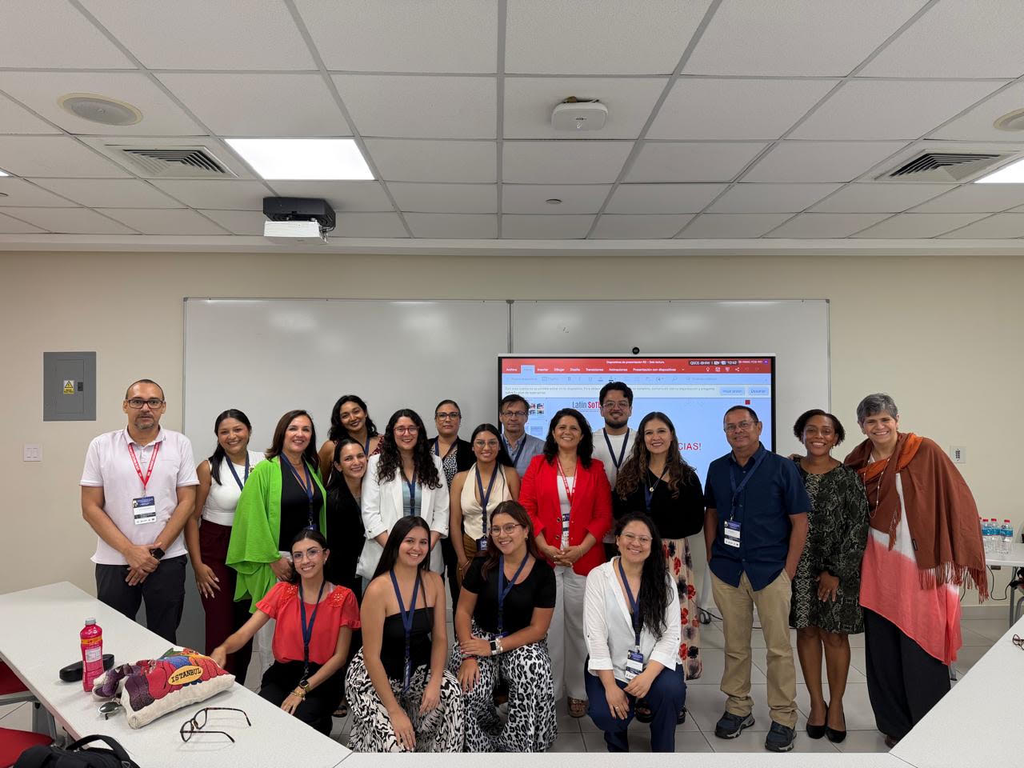
The 4th LatinSoTL Congress brought together academics, researchers and higher education leaders from across Latin America and the Caribbean around the Scholarship of Teaching and Learning (SoTL), an approach that promotes innovation and systematic research on teaching and student learning, building the evidence needed to transform and strengthen teaching practice. The international gathering showcased experiences and research aimed at rethinking how teaching and learning happen in higher education.
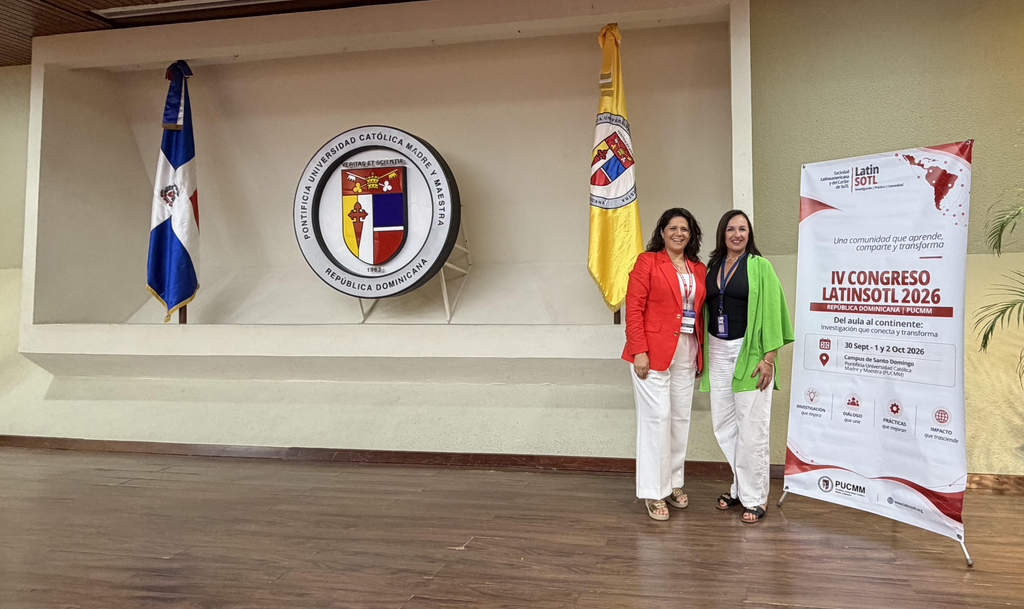
Leslier Valenzuela, Associate Professor in the Department of Management and Director of the Undergraduate School at FEN, took part in meetings throughout the congress and in the closing assembly, where she was appointed to lead the LatinSoTL Futuro commission. She also presented the paper “When Students Change Their Minds: Anonymous Digital Deliberation as a Transformative Learning Experience in Ethics Education,” co-authored with Dr. Claudio Álvarez of Universidad de los Andes and Dr. Gustavo Zurita of FEN’s Department of Management Control and Information Systems, Universidad de Chile. The study tackles one of the key challenges in business school education: moving beyond ethics teaching built solely on principles and content toward experiences that foster critical reflection, the weighing of different perspectives and the reconsideration of one’s own judgments. It does so through learning activities supported by EthicApp, a digital platform that uses AI agents and is designed to enable collaborative ethics teaching.
For Valenzuela, the real challenge is not just innovating in the classroom, but also generating evidence of what actually changes in students’ learning. “When we design safe spaces to argue, listen to different perspectives and decide again, ethics stops being just content and becomes a learning experience,” she said.
Professor Verónica Pizarro presented two papers. The first, “Academic Self-Efficacy in Business Undergraduates: Psychometric Evidence for the ESAA in Chile,” co-authored with professors Ana Moraga and Vesnia Ortiz of Universidad de La Frontera, examines academic self-efficacy among business students and contributes evidence for its study in the Chilean context. The second, “What the North Doesn’t See: Service-Learning, the SDGs and Territorial Knowledge in Latin American Higher Education,” written with professors Johan Rivas of Pontificia Universidad Católica de Valparaíso (PUCV) and Francisco Jofré of Universidad Santo Tomás, explores the links between university education, service-learning, the Sustainable Development Goals and knowledge rooted in Latin America’s own territories. The study proposes turning everyday teaching and university management practices into subjects of systematic inquiry, using evidence on learning to improve teaching and sharing the results with the academic community.
SoTL is gaining growing relevance at Universidad de Chile. Prof. Ulrike Kemmerling Weis, the University’s Vice-Rector for Academic Affairs, has expressed her support for building an institutional culture in which teaching innovation goes hand in hand with research, outcome assessment and organizational learning, and has backed the launch of the SoTL journal led by Professor Óscar Jerez.
The 4th LatinSoTL Congress addressed strategic topics for the future of higher education, including pedagogical innovation, artificial intelligence and emerging technologies, learning assessment and quality assurance, academic leadership, curriculum innovation, internationalization, inclusion, student well-being and transformative methodologies.
“Universidad de Chile’s participation in this forum helps strengthen an academic agenda focused on connecting research, teaching and educational innovation, placing student learning at the center and generating knowledge that can be shared and transferred to other disciplines, programs and higher education institutions across the region,” said Leslier Valenzuela, Director of the Undergraduate School.